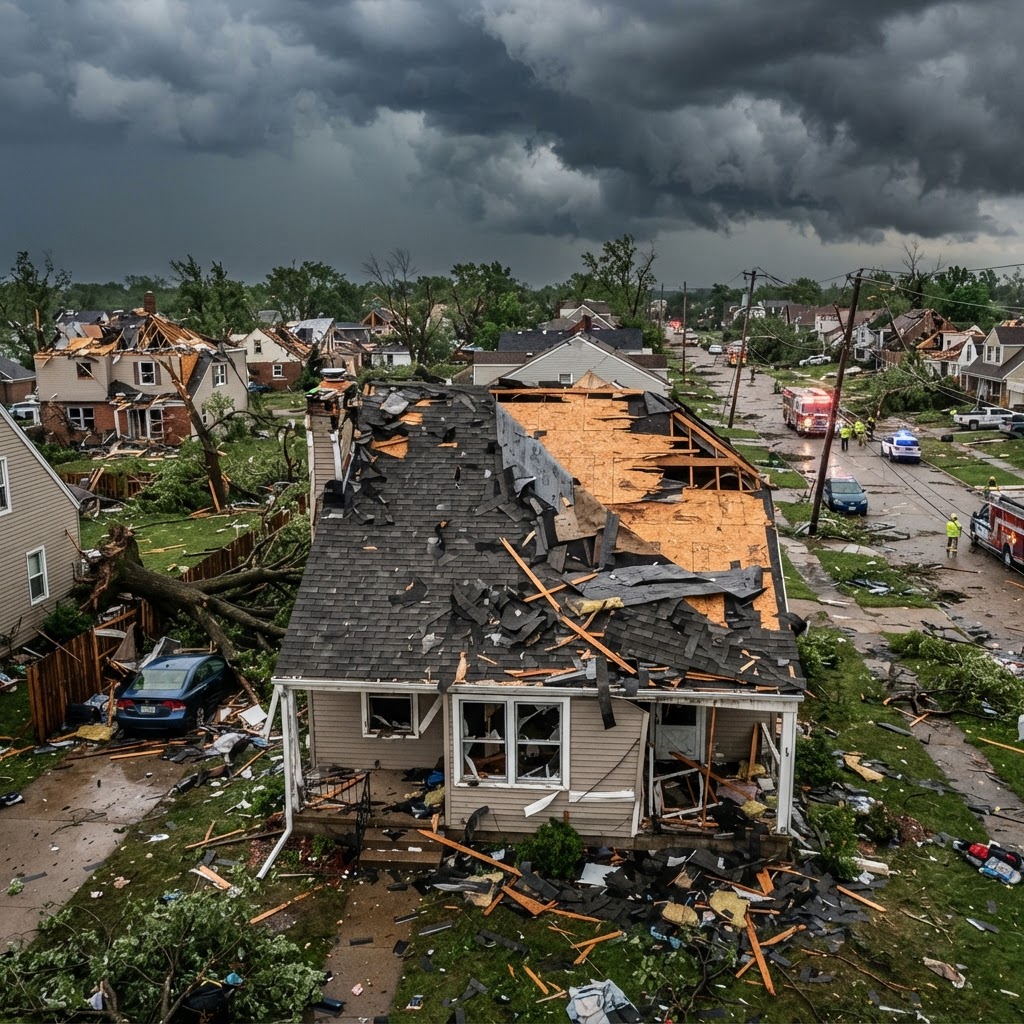
Roof Systems: How Tornado Damage Affects Different Materials
St. Louis's storm-prone climate creates unique challenges for different roofing systems. Understand how each material responds to tornado and high-wind damage.
Asphalt Shingle Roofs (Most Common)
Wind speeds above 90 mph can lift shingles, and hail creates water infiltration points. Mitigation steps make a big difference.
- Use hurricane-rated nails (6 per shingle)
- Proper ventilation reduces uplift pressure
- Quality underlayment adds wind resistance
- Reinforced edge treatment prevents wind entry
Metal Roofing
Metal roofs carry a 140+ mph wind rating and are highly hail resistant with a 40–70 year lifespan.
- Excellent performance in high winds
- Expansion and contraction can cause fastener issues over time
- Requires specialty contractors for installation and repair
Slate, Tile & Flat Roof Systems
Slate and tile offer 75–200 year lifespans with excellent wind resistance. Flat commercial systems require proper mechanical attachment to prevent wind uplift.
- Slate/tile: very heavy — requires structural assessment
- Flat roofs: membrane tears during wind events are the primary risk
- Standing water after storms accelerates flat roof wear
The best roofing choice depends on your budget, climate, aesthetic preferences, and structural capacity. Our team can assess your current roof's vulnerability and recommend improvements specific to St. Louis's tornado and hail season.
Ready for Your Free Inspection?
Cox Roofing & Restoration serves St. Louis, MO and surrounding communities.

